Tactic Update 12.8.2025
From Data to Dollars: How I Engineer Closed-Loop Revenue Attribution
In B2B marketing, the most expensive mistake isn't bad creative; it’s bad targeting. I’ve seen too many organizations pour budget into paid media platforms hoping for leads, only to realize they have no idea which dollars actually resulted in signed contracts.
To solve this, I don't just "run ads." I build ecosystems.
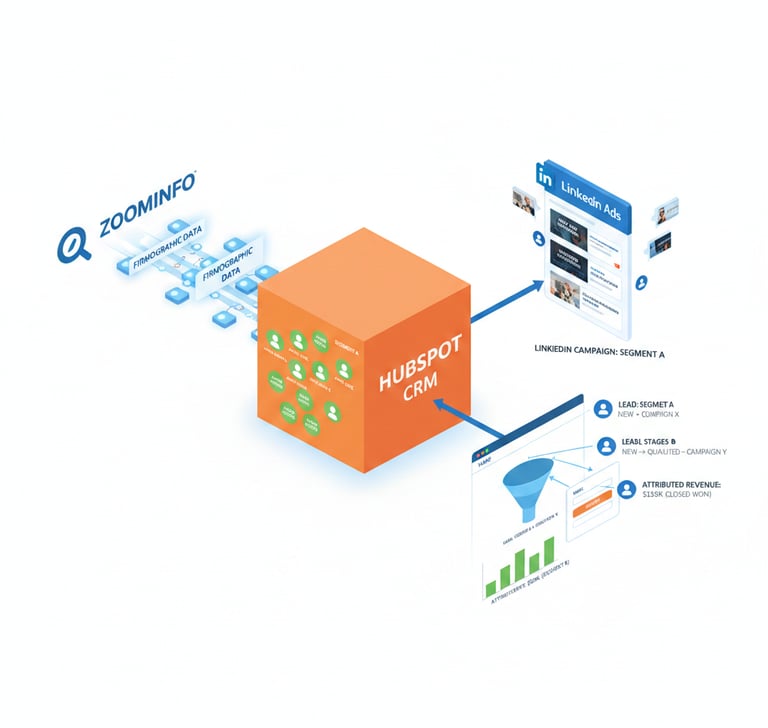
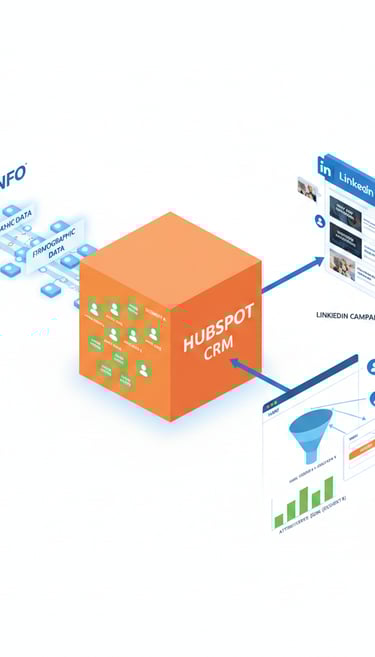
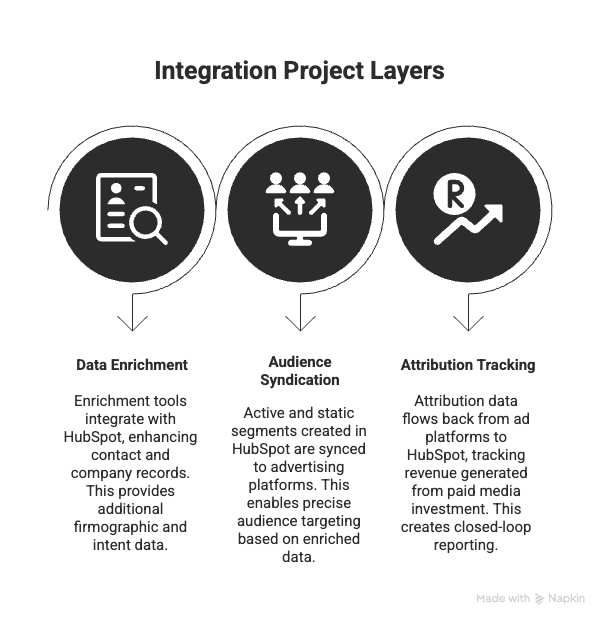
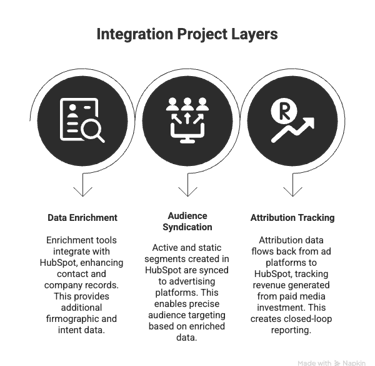
My approach relies on a specific three-layer integration architecture that connects raw data to revenue outcomes. It bridges the gap between the marketing tools we use to find people and the CRM we use to close them.
Here is the blueprint I use to turn a disjointed tech stack into a revenue engine.
Phase 1: The Foundation (Intelligent Enrichment)
Everything starts with data integrity. If the CRM is messy, the targeting will be messy.
I integrate enrichment tools like ZoomInfo, Seamless.ai, or 6sense directly into HubSpot. Instead of relying on manual entry, we automate the ingestion of firmographic data (company size, revenue, industry) and intent data. This means before we spend a dime on ads, we know exactly who is in our system and, more importantly, who is actually in-market for what we sell.
Phase 2: The Activation (Audience Syndication)
Once the data is clean, I have to make it move. Static lists die quickly, so I rely on HubSpot’s active lists (dynamic segments).
I build segments based on high-intent criteria for example, "VPs of Operations in the Manufacturing sector who visited the pricing page." I set up a sync that pushes these audiences directly to LinkedIn Ads, Google Ads, and Facebook Ads.
This is where the magic happens: We stop renting audiences from ad platforms and start leveraging our own. We serve creative only to the people we know are qualified, drastically reducing wasted spend.
Phase 3: The Truth (Attribution & ROI)
The final piece of the puzzle is the feedback loop. Most marketers stop measuring at the "Lead" stage. I track through to the "Deal."
By utilizing HubSpot’s native integration with ad platforms, I ensure that when a lead converts, the attribution data travels with them. When a sales rep closes a deal three months later, I can look back and see exactly which campaign, ad group, and creative asset generated that revenue.
The Result
This architecture moves us away from "vanity metrics" like clicks and impressions. It allows me to report on what actually matters: Customer Acquisition Cost (CAC) and Return on Ad Spend (ROAS).
We stop guessing what works. We simply look at the revenue, trace the line back to the source, and double down on the strategy that pays.